


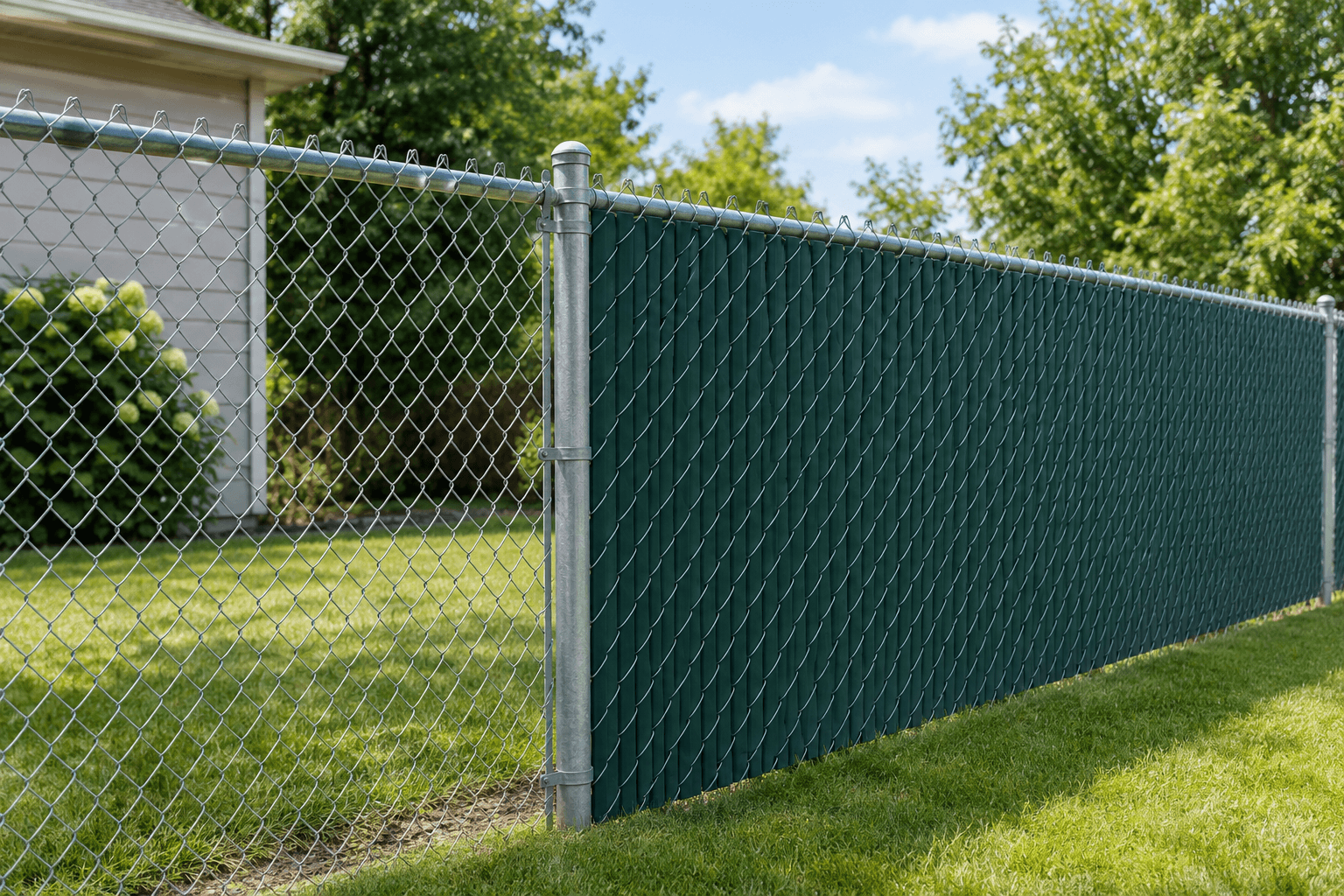
Chain link fences are popular for a reason. They are durable, low-maintenance, and built to withstand decades of heavy weather. However, your needs for your yard can change over time. Maybe a new building went up behind your lot, you installed an outdoor pool, or you simply want to enjoy your backyard without feeling like you are on display for the neighborhood.
If you already have a functional chain link fence surrounding your property, you do not need to tear it all down to get the seclusion you want. Adding privacy slats directly to an existing chain link fence is one of the simplest and most cost-effective ways to transform an open yard into a private retreat.
Before you order materials, it helps to understand how your current fence measures up, what slat options exist, and how to install them smoothly.
When Existing Chain Link Can Accommodate Privacy Slats
Most residential and commercial chain link fences can easily support privacy slats, but the existing structure must be structurally sound.
Privacy slats do more than just block sightlines; they also act like a sail in heavy winds. When wind blows against an open chain link mesh, air passes right through. Once you slide privacy slats into the diamonds, wind resistance increases significantly.
Your current fence posts, top rails, and terminal footings need to be sturdy and firmly anchored in the ground. If your fence posts are loose, rusting through at ground level, or leaning heavily to one side, adding slats will put extra stress on those weak spots during a thunderstorm or heavy breeze. If the structure is straight and stable, your fence is a great candidate for a privacy upgrade.
How to Identify Compatible Mesh and Measure Your Fence
To choose the right privacy slats, you need to know two main measurements: the height of your fence and the size of the mesh diamonds.
Measuring the height is straightforward. Use a tape measure to check the vertical distance from the bottom wire to the top wire of the mesh. Standard residential chain link fences are usually four, five, or six feet tall.
Measuring the mesh diamond requires a quick check diagonally across one opening. Measure the inside distance between two parallel wires forming the diamond shape. The most common residential sizes are two inch and two and a quarter inch diamonds. Commercial properties often use smaller two-inch or even smaller heavy-duty mesh.
Getting this measurement accurate is crucial because slats are designed to fit snugly inside specific mesh sizes. If you buy slats meant for a two-inch diamond and try to force them into a smaller mesh, they will not slide down smoothly.
Top Locking vs Bottom Locking Options
When selecting privacy slats for an existing fence, you will encounter two main styles for securing the slats in place: top locking and bottom locking systems.
Top locking slats use a locking channel or horizontal track that runs along the top of the fence mesh. As you slide each vertical slat down through the diamonds, the top of the slat snaps firmly into the channel. This design gives the top edge of your fence a clean, finished appearance while keeping individual slats from slipping down over time.
Bottom locking slats use a horizontal locking track threaded through the bottom row of mesh diamonds before you install the vertical slats. As you slide each slat down, a notch at the bottom of the slat locks securely into the bottom track. Bottom locking slats are popular because the locking channel stays hidden near the grass or grade line, leaving the top of the fence looking completely open and natural.
For homeowners seeking maximum blockage, advanced options like Ultimate Slats™ feature flexible wings that provide up to 98 percent privacy and wind protection. Deciding between styles comes down to your personal preference for how you want the finished fence to look and perform.
Installing Slats in an Existing Fence
Adding slats to a standing fence is a straightforward project that most homeowners or small crews can complete in an afternoon.
First, clear away any weeds, grass, or debris growing along the bottom of the wire mesh, so you have clear access to the bottom diamonds. If you are using bottom locking slats, thread the horizontal locking channel through the bottom mesh row across the entire section you plan to work on.
Next, manually insert the vertical slats one by one from the top of the fence, weaving them downward through the mesh diamonds until they engage with the locking track. Working section by section keeps your progress organized and ensures every slat sits at a uniform height.
If you are trying to decide which specific slat style matches your project needs, you can read our comparison on Noodle Link vs. Traditional Privacy Slats: Which is Right for Your Next Job? to see how different slat profiles perform.
Factory Inserted Fencing vs Adding Slats to an Existing Fence
While adding loose slats to a current fence works great for existing structures, it is helpful to know how that process differs from ordering a brand new fence with pre-installed slats.
When you buy loose slats by the bag, you are manually weaving hundreds of individual plastic strips through a fence that is already stretched tight between posts. It is simple work, but it does take time and manual effort.
By contrast, ordering factory-inserted chain link fencing delivers wire mesh with privacy slats already woven into place at the factory before it gets rolled up and shipped. The entire roll arrives ready to hang, letting contractors install the wire mesh and privacy coverage in a single step.
If you are keeping your current posts and wire intact, manual insertion by the bag is the way to go. But if you are planning a massive project from scratch, factory-inserted options save enormous amounts of jobsite labor.
When Replacing the Chain Link Makes More Sense
Adding privacy slats is a fantastic solution for a well-maintained fence, but there are times when replacing the wire mesh altogether is the smarter choice.
If your existing chain link is severely sagged, bent from fallen tree limbs, or covered in thick rust, inserting rigid privacy slats will highlight those imperfections rather than hide them. Slats require straight vertical channels to slide down smoothly. Warped or stretched mesh makes weaving slats difficult and can leave your privacy coverage looking uneven.
In cases where the wire mesh is damaged beyond easy repair, pulling down the old mesh and hanging fresh, high-quality wire with pre-inserted slats gives you a brand new, flawless look without requiring you to dig up and replace the embedded concrete posts.
Quality Slats for Your Home Project
Upgrading an existing chain link fence with privacy slats gives you the seclusion you want without the high cost of a total fence replacement. By measuring your mesh accurately and choosing quality materials, you can transform your open backyard into a quiet, secure space.
At PrivacyLink, we offer a comprehensive lineup of decorative chain link fence privacy slats built to withstand the elements. To learn more about our commitment to quality craftsmanship, explore how PrivacyLink products are made in the USA. Whether you need individual slat packages for a weekend DIY project or complete factory-inserted fencing solutions, our team is ready to help you find the perfect fit for your property.
